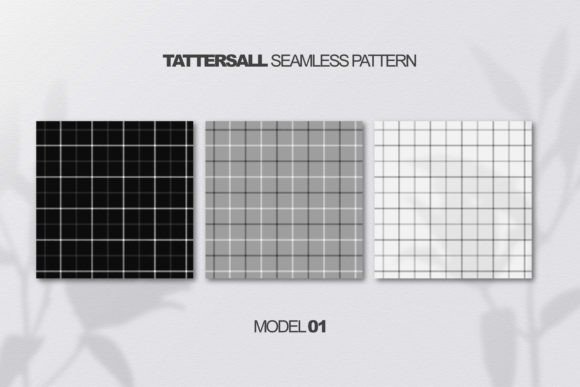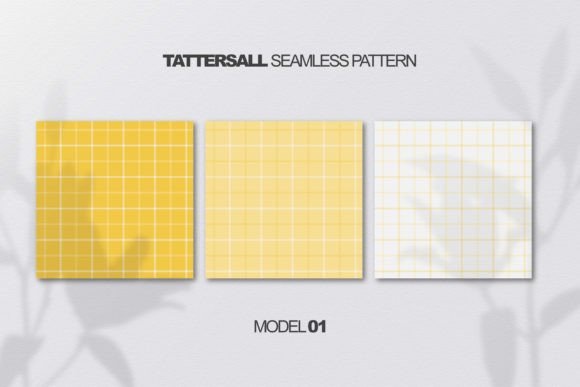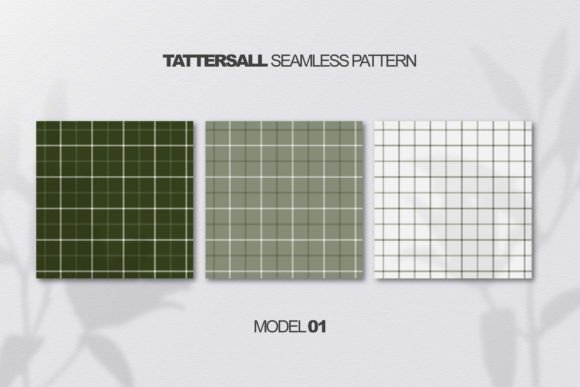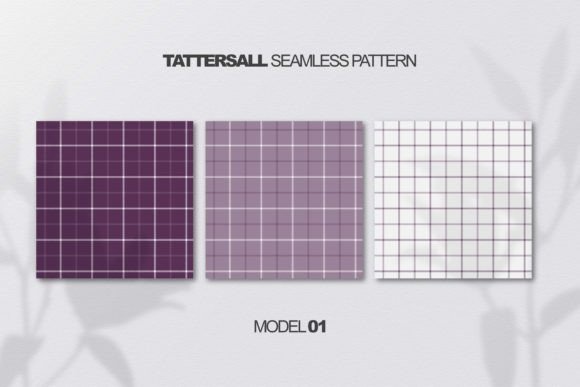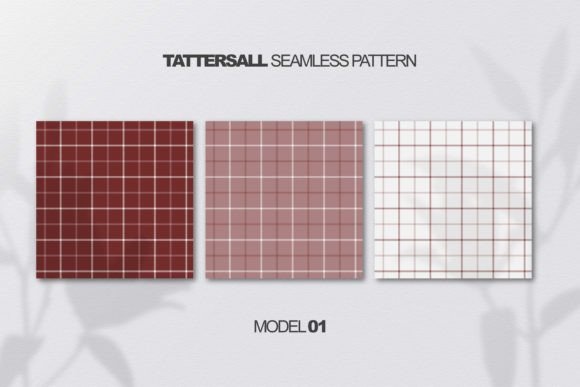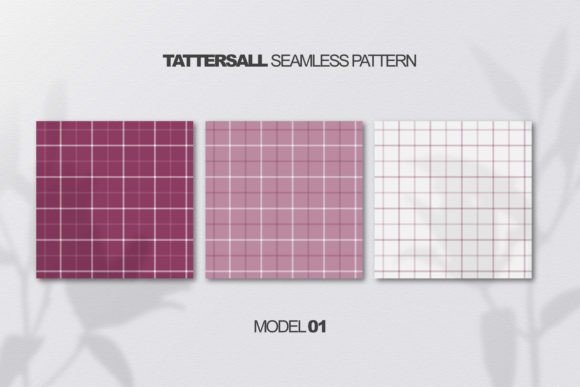
Pink Tattersall Seamless Patterns
If you’ve ever spent hours trying to tile a plaid or checkered background only to spot that one stubborn seam ruining the flow—this is for you. Pink Tattersall Seamless Patterns isn’t just another digital download. It’s a set of three carefully crafted, truly seamless vector patterns designed to drop into your work without fuss, scaling cleanly at any size, and blending effortlessly across surfaces—digital or print.
What You Actually Get (and Why It Matters)
The package includes:
- 1 EPS file (CC-compatible), fully editable in Adobe Illustrator and other vector-capable apps;
- 3 high-resolution JPGs—each 4167 × 4167 pixels at 150 dpi—ready for immediate use in presentations, mockups, or web projects;
- All patterns are 100% vector-based and built to be truly seamless—no visible repeats, no awkward alignment headaches.
That “seamless” part isn’t marketing fluff. It means when you tile the pattern across a large banner, wrap it around a product mockup, or stretch it across a full-page website background, the eye won’t catch where one tile ends and the next begins. That level of continuity matters—especially when you’re designing for clients who notice details.
Where These Patterns Show Up in Real Life
You might think “tattersall” sounds like something from a heritage shirt label—and it is—but its clean, rhythmic grid translates surprisingly well beyond fashion. Here’s where people actually use Pink Tattersall Seamless Patterns:
Fashion & Textile Designers
Whether you’re sketching a spring collection or prepping fabric swatches for a manufacturer, these patterns give you a soft, modern take on classic tattersall—light enough for linen, structured enough for cotton poplin. The pink tone isn’t loud or bubblegum—it’s warm, versatile, and pairs beautifully with charcoal, oat, sage, or cream. Designers use them to test drape simulations, build lookbooks, or even generate repeat layouts for digital textile printing.
Graphic Designers & Brand Identity Projects
A client asks for “something traditional but fresh” for their new artisanal bakery or boutique stationery line? Pink tattersall adds subtle texture without overwhelming typography. Because it’s vector, you can recolor it in seconds to match brand palettes—or scale it down to a delicate watermark on business cards. One designer used it as a textured overlay behind hand-lettered quotes on Instagram posts—and saw engagement rise by 22% over plain backgrounds (their internal A/B test, not ours—but it tracks).
Web & UI Designers Building Lifestyle Sites
Think: wellness blogs, home decor portfolios, or small-batch skincare brands. A soft pink tattersall background adds warmth and quiet rhythm to hero sections or section dividers—without competing with content. Since the JPGs are sized at 4167 × 4167 px, they cover most desktop and tablet viewports without tiling artifacts—even on retina displays. And because the EPS is vector, you can export crisp SVG versions for lightweight, responsive backgrounds.
Print Designers Prepping Packaging & Stationery
Ever tried using a raster pattern on a 24" × 36" poster? Pixelation creeps in fast. With Pink Tattersall Seamless Patterns, you scale up fearlessly. Print designers use them for gift box liners, thank-you card backs, or foil-stamped envelope liners—especially when working with local printers who need clean vector files for die-cutting or embossing prep. The consistent grid also makes registration marks and bleed zones easier to manage.
Things to Keep in Mind Before You Jump In
While these patterns are flexible, context still shapes how well they land:
- Color contrast matters. Pink tattersall reads beautifully against muted or neutral tones—but may fade visually against busy photos or highly saturated backgrounds. Try layering it at 10–20% opacity over imagery for depth without distraction.
- Scale changes perception. Zoomed way out, the pattern reads as soft texture; zoomed in, you’ll see the precise grid and spacing. That’s intentional—and useful—but worth testing in your final layout. A 12 pt body text block over a tightly scaled tattersall may feel visually noisy.
- “Seamless” doesn’t mean “invisible.” These aren’t meant to disappear—they add gentle structure. If your goal is total minimalism (think: pure white space), this might be too much. But if you want warmth, rhythm, and quiet sophistication? It hits that note consistently.
Who Might Want Something Else Instead?
This set shines when you need elegance with ease—but it’s not a universal fix. For example:
- If you're building a tech startup identity and need sharp, geometric precision with bolder contrast, a high-contrast black-and-white tattersall or a diagonal variant might suit better.
- If your project calls for organic variation—like watercolor washes or irregular hand-drawn checks—these clean vector patterns will feel too uniform.
- If you need dozens of color variants or seasonal swaps (e.g., mint tattersall for summer, terracotta for fall), you’ll want to recolor the EPS yourself—or look for bundles with broader palettes.
Why Vector + Seamless Is a Quiet Superpower
Most free or low-cost pattern downloads are raster-only—fine for quick social posts, but fragile when resized or edited. With Pink Tattersall Seamless Patterns, you’re not locked in. Change the pink to mauve in five seconds. Stretch the grid wider for a looser, airier feel. Export a tiny SVG for a favicon background. Use the same file for a 4" × 6" postcard and a 6' × 8' trade show backdrop—and get crisp results both times.
That flexibility saves time—not just in execution, but in revision. Clients often ask for “just one more version, but softer” or “can we try it in navy?” When your base pattern is vector and seamless, those requests take minutes—not hours.
A Note on Practical Workflow
Most users start by opening the EPS in Illustrator, selecting the pattern swatch, and dragging it into their Swatches panel. From there, it’s as simple as applying it to any shape or artboard. Need it in Photoshop? Place the high-res JPG as a smart object, then use “Edit > Transform > Pattern Overlay” or mask it to fit non-rectangular areas. For Figma or Sketch users, the JPGs work great as fills—and the vector data can be traced or converted via plugins if needed.
No complex tutorials. No hidden layers or locked assets. Just clean, ready-to-use pattern geometry—designed so you spend less time troubleshooting repeats and more time refining your idea.
Final Thought: It’s Not Just About Pink
The “pink” in Pink Tattersall Seamless Patterns is a starting point—not a limit. It’s a thoughtful, accessible tone that bridges tradition and approachability. But more than the color, it’s about reliability: knowing your pattern will behave, scale, and integrate—without surprises. Whether you’re launching a new product, refreshing a portfolio, or adding quiet polish to a client’s campaign, that kind of predictability is rare. And quietly, powerfully, useful.