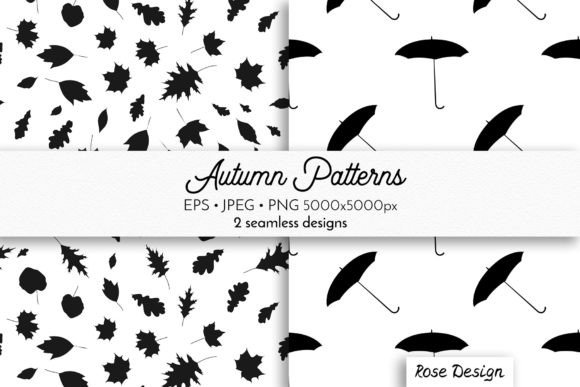
Leaves and Umbrella Silhouette Patterns
Autumn isn’t just a season—it’s a visual language. Crisp edges, layered textures, quiet movement, and subtle contrast. The Leaves and Umbrella Silhouette Patterns set captures that language in two clean, versatile, and deeply usable seamless designs: one built from organic leaf shapes, the other from elegant umbrella silhouettes. Both feature bold black outlines against transparent or white backgrounds—designed not as decorative afterthoughts, but as functional foundations for real creative work.
What You Get—and Why It Matters
This isn’t a collection of generic clipart. Each pattern is crafted at 5000×5000 px in JPG and transparent PNG formats—high-resolution enough for large-format printing, fabric yardage, or premium stationery. The EPS10 vector files mean you can scale infinitely without losing clarity, adjust spacing, recolor individual elements, or isolate motifs for custom layouts. That flexibility matters when your goal is consistency across touchpoints: a business card that matches a tote bag, which echoes a social media banner, all unified by the same visual rhythm.
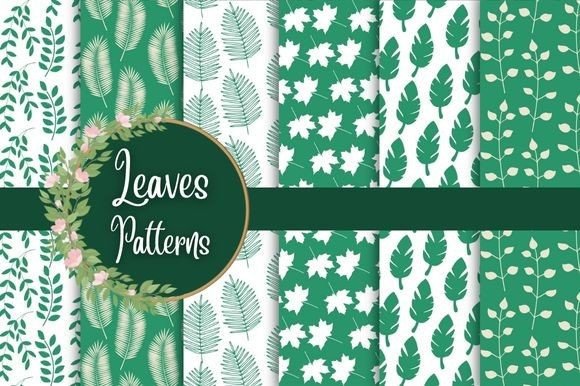
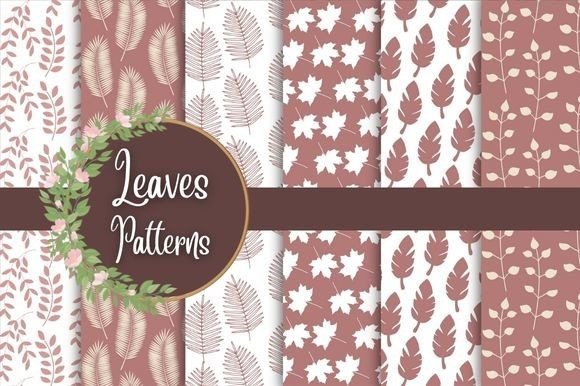
The leaf pattern leans into natural asymmetry—varied sizes, gentle overlaps, and irregular spacing—so it feels alive, not mechanical. The umbrella pattern balances structure and softness: clean curves, consistent negative space, and a slight tilt that suggests motion, like wind catching fabric. Together, they offer contrast without conflict—ideal for pairing, layering, or using separately depending on context.
Creative Uses That Go Beyond “Pretty Backgrounds”
Designers often reach for patterns to fill space—but these work best when they support intention. Here’s how different users apply them meaningfully:
- Textile designers use the leaf pattern for lightweight cotton scarves or linen pillow covers—its organic flow complements hand-stitched hems and natural fibers. The umbrella motif translates beautifully to raincoats, aprons, or even ceramic decals for mugs sold in boutique gift shops.
- Small business owners (especially in wellness, education, or lifestyle niches) integrate the umbrella pattern into branded packaging—think kraft paper mailers with subtle black silhouettes stamped in soy ink. It signals preparedness, care, and quiet elegance without shouting.
- Educators and workshop leaders print the leaf pattern onto large-format posters for seasonal lesson plans—then cut out individual leaves for tactile sorting activities, storytelling prompts, or classroom decor that evolves with the calendar.
- Bloggers and content creators use the transparent PNGs to overlay on photography—adding subtle texture to Instagram story backgrounds or blog headers without obscuring text legibility. A light 10–15% opacity on the umbrella pattern over a misty city photo creates instant autumn mood.
- Stationery makers pair both patterns intentionally: leaf motifs on gift tags and wrapping paper, umbrellas on thank-you cards or subscription box inserts—creating narrative cohesion across customer touchpoints.
Adapting for Audience and Format
One size doesn’t fit all—and neither should a pattern. The real value of Leaves and Umbrella Silhouette Patterns lies in how easily it adapts. For digital use, reduce opacity or add a soft Gaussian blur to soften contrast on screens. For textile printing, test a swatch first: the high-res JPG ensures crisp detail on woven fabrics, while the vector file lets you adjust motif density for knit vs. canvas.
When designing for children’s products, simplify further—use only the largest leaf shapes or isolate single umbrellas as standalone icons. For luxury branding, invert the palette: white silhouettes on deep charcoal or forest green gives sophistication and depth. And for accessibility, always check contrast ratios—black-on-transparent passes AA standards when placed over light or mid-tone backgrounds.
Staying Consistent Without Sounding Repetitive
Using the same pattern across multiple items builds brand recognition—but repetition can feel lazy if not handled thoughtfully. Try these practical approaches:
- Vary scale, not motif. Use the full seamless tile on a pillowcase, then zoom into a single leaf or umbrella for a monogram-style logo or watermark.
- Change context, not content. Print the leaf pattern on uncoated paper for earthy wedding invites, then use the same file on glossy stock for modern art prints—same design, different emotional tone.
- Introduce restraint. Apply the pattern to only one element per piece: the border of a menu, the spine of a notebook, the inside flap of an envelope. Let negative space do half the work.
This kind of discipline keeps your output intentional—not just “I used a pattern,” but “I chose this pattern because it supports how people will experience this thing.”
Real Projects, Real Decisions
A freelance illustrator recently used the umbrella pattern as a repeating border on a series of printable classroom calendars—then extracted three umbrella shapes to serve as icons for “rainy day,” “indoor activity,” and “quiet time.” No extra assets needed. Just smart reuse.
A small-batch candle maker printed the leaf pattern onto soy-based labels, then paired it with minimalist typography and a warm amber wax color. Customers didn’t just notice the design—they commented on how it felt “seasonally honest,” not trend-chasing.
And a university communications team applied the transparent umbrella PNG over campus photos for their fall newsletter—subtle enough to avoid distraction, strong enough to unify six departments under one seasonal theme.
Getting Started—Without Overthinking
You don’t need a full brand guide to begin. Start with one application that solves a current need: updating holiday cards, refreshing social templates, or prototyping a new product line. Open the EPS file in Illustrator, duplicate the artboard, and experiment with spacing—tighten it for a busy textile, widen it for breathable stationery. Try swapping black for navy or charcoal to shift tone instantly.
If you’re new to working with seamless patterns, begin with the JPGs—they drop straight into Canva, Photoshop, or Affinity Designer. Once you see how the rhythm works in your layout, move to the vectors for refinement.
Remember: tools like Leaves and Umbrella Silhouette Patterns succeed not because they’re “perfect,” but because they’re reliable, adaptable, and grounded in real use. They save time without sacrificing voice—and that’s what makes space for better ideas, clearer messaging, and work that feels like yours.