Sweets on Watercolor Patterns: Playful, Print-Ready Designs for Real Creative Projects
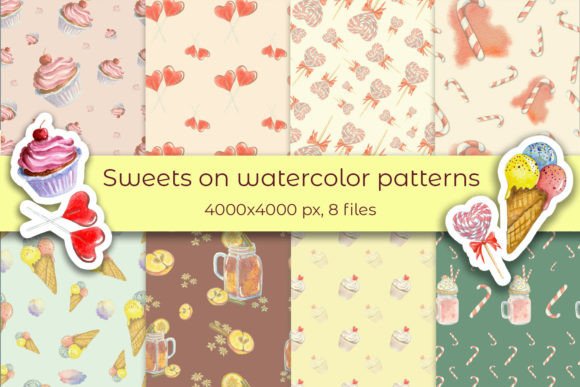
If you've ever spent hours searching for dessert-themed fabric prints that feel fresh—not cutesy, not cliché—then Sweets on Watercolor Patterns is the kind of resource that quietly solves a problem you didn’t know was slowing you down. This isn’t just another clipart pack or generic background set. It’s a curated collection of eight seamless watercolor patterns, each built around real, mouthwatering sweets—think macarons with soft pastel glazes, waffle cones dripping with swirls of mint and berry, delicate cupcakes crowned with piped buttercream, and lemon tarts glowing under gentle washes of pigment.
Where These Patterns Actually Shine (Beyond the Obvious)
Seamless watercolor patterns like these aren’t just “pretty.” Their real value shows up in everyday creative work—especially when consistency, scale, and texture matter. Here’s where users consistently tell us they’ve gotten unexpected mileage:
- Fabric designers use them to mock up limited-run apparel—like matching aprons and tea towels for a small-batch bakery brand. Because each pattern is 4000×4000 pixels at 300 dpi, it scales cleanly from a tiny pocket detail to a full-width dress panel without pixelation or awkward repeats.
- Stationery makers layer them behind hand-lettered quotes on greeting cards or print them directly onto kraft paper for wedding favor tags. The watercolor softness keeps typography legible while adding warmth—no harsh edges competing for attention.
- Home goods artisans apply them to digital mockups before committing to yardage: imagine testing how a raspberry tart motif reads on a linen duvet cover versus a cotton dishcloth. The JPEG format means no software barriers—you drop it into Canva, Illustrator, or even Photoshop Elements and start experimenting immediately.
- Teachers and camp coordinators print them on sticker paper for reward charts or use them as backgrounds for printable baking-themed lesson plans. One user told us she printed a cherry pie pattern on vinyl and cut it into mini magnets for her classroom’s “dessert spelling bee” wall display.
Who Benefits—and How Their Needs Shape the Use
The beauty of Sweets on Watercolor Patterns lies in how flexibly it adapts across experience levels and goals:
- Beginners appreciate that there’s zero learning curve to get started. No vector editing required. If you can drag-and-drop a JPEG into your design tool, you’re ready. Many first-time users begin by resizing one pattern to fit a 5×7 card template—then realize they can rotate, recolor (using simple overlay layers), or mask parts of it to create custom focal points.
- Small-business owners rely on the high resolution and seamless tiling to maintain professional polish across product lines. A candle maker might use the chocolate truffle pattern on both jar labels *and* the inside flap of her shipping boxes—creating subtle brand continuity without needing separate assets.
- Quilters and sewists often pair these with solid-color fabrics to balance visual weight. For example, a subtle vanilla bean pattern works beautifully as a background for bold appliqué strawberries—giving depth without overwhelming the main motif.
- Digital planners and educators use cropped sections as decorative dividers between weekly meal prep tabs or dessert-themed vocabulary pages. Because the watercolor texture feels organic—not digital—it adds tactile appeal even on screen.
What to Keep in Mind Before You Start Designing
These patterns are versatile—but like any tool, they work best when matched thoughtfully to your project’s needs. A few practical considerations:
- Color flexibility matters. While the patterns come in soft, cohesive palettes (think rose quartz, sky blue, warm beige, and toasted almond), they’re JPEGs—not layered PSDs. That means you can’t isolate individual sweets to recolor separately. But you *can* adjust overall tone using brightness/contrast or hue/saturation sliders in most editors. Try warming up a lavender macaron pattern slightly for a spring collection—or cooling down a caramel swirl for a fall palette.
- Scale awareness helps avoid repetition fatigue. At 4000×4000 pixels, the repeat unit is generous—but zoom in too far on a single cupcake and you’ll see the tile edge. For large-format items (like shower curtains or tote bags), test-print a corner section first to confirm the rhythm feels natural at your intended viewing distance.
- Texture plays well with physical materials. The watercolor grain translates beautifully to textured substrates—linen, canvas, uncoated cardstock—because it echoes natural fiber variation. On glossy surfaces or metallic foils, however, some subtlety may soften. If you’re printing on satin ribbon or foil-stamped packaging, consider running a quick sample to gauge how much pigment lift occurs.
- Licensing is straightforward—but worth noting. These are for personal and commercial use (including small-batch physical products and digital templates), but not for reselling the patterns themselves as standalone design assets. That means you’re free to sew and sell dresses with the waffle cone print—but not to upload the JPEG to a stock site and license it to others.
Why Watercolor Sweets Feel Timeless—Not Trendy
There’s a reason dessert motifs endure across decades of design: they tap into shared joy, comfort, and celebration. But not all sweet-themed graphics age well. Clipart cherries? Overdone. Hyper-realistic cake photos? Hard to scale or adapt. The watercolor treatment in Sweets on Watercolor Patterns sidesteps those pitfalls. It’s stylized enough to feel intentional, soft enough to stay approachable, and detailed enough to hold interest on close inspection.
One designer told us she used the lemon tart pattern across three seasons—lightening the tones for spring, deepening the yellows for summer, and adding a subtle shadow layer for autumn—all without changing the base file. That kind of longevity is rare in trend-driven design resources.
Whether you're sketching ideas for a new line of baby bibs, prepping assets for a café’s seasonal menu redesign, or just treating yourself to a joyful afternoon of collage-making—these patterns offer more than decoration. They offer permission to lean into sweetness without sacrificing sophistication. And that, honestly? Is the kind of creative fuel that sticks around long after the last cupcake is gone.